
Leave your details and we'll call you back
We can call you at a time that suits you.

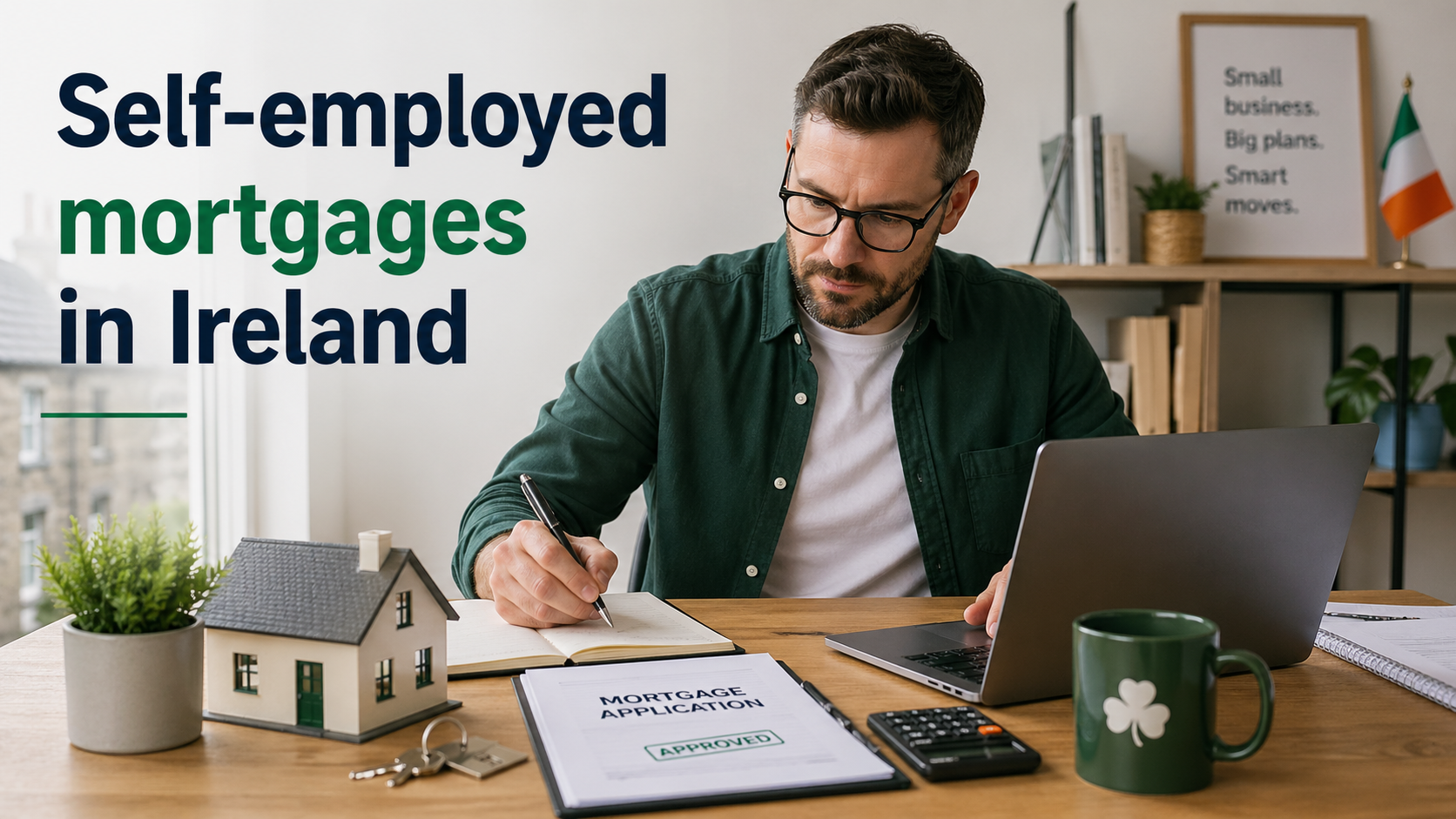
Mortgage lenders will always look. If your company is trading less than 2 years, it’s almost impossible to get more than that, except they’re trading realistically. It’s pretty simple. Mortgage lenders will assess you as either a sole trader or a limited company. That’s what every self-employed person is set up. Effectively, if you are non-PAYE, you’re classed as self-employed.
The different types of ‘self-employed’
So, if you’re not getting a payslip and there’s an employer not paying tax for you, you’re responsible for your own taxes, you’re classed as self-employed. It’s pretty black and white. First up, sole traders. Obviously, the most simple self-employed applicant is a sole trader. It’s pretty straightforward. What a mortgage lender will look at for the income of a sole trader is their net profit, not their turnover, their net profit. So that’s the turnover less all the allowable expenses. And it’s that figure, and it’s a 2-year average of that figure that they’ll take. Simple as that.
Limited companies
A limited company is a little bit more complicated. If you’re a director of a limited company, obviously, the thing that they’re going to look at is your shareholding. So, if you own 100% of the company, again, that’s fine with it. If it’s a 50-50 or whatever the split is, they analyse it based on the split that you have.
They will look at several aspects that make up the income of a – that’s net profit, number one. Number two, director’s remuneration. Number three, depreciation. They will also look at interest on loan payments that you have, and they will. Now, what they do take off those figures, though, are capital interest on loans. So, just to recap, it’s net profit, director’s remuneration, depreciation, interest on the loans. Then the capital repayments on those loans is deducted from the income. And again, they’ll do – they’ll take a figure from that, again, 2-year average.
How long have you been waiting?
And that’s what they’re going to come to for your income. If you are not trading for 2 years, again, it’s going to be very difficult to get a mortgage lender to dismiss your application. So, the kind of documentation that mortgage lenders then look for, for a self-employed applicant, are 2-year certified accounts from your accountant, 2-years Chapter 4 self-assessments.
That’s the actual document that you get from the revenue commissioners with your income certified on that document. 2-years Form 11 tax computations. That’s like the under-the-bosh workings of that Chapter 4 self-assessment.
So, details, if you break down – a detailed breakdown of any allowances and any deductions. The next thing they look for, then, is your most recent tax appearance, that 6-month business bank statements. Obviously, all your income, all the commitments, all the outcomes, the e-commerce, etc.
So, effectively, the most important thing is, as I say, 2-years trading. You really have to have that if you’re going to be seriously considering getting a mortgage lender. So, this morning I want to talk about self-employed mortgage applications and tips for getting approval if you’re a self-employed applicant.
Mortgage lenders typically look for 2-years average income. That’s the way that they work. They look at the last 2-years of your business and they’ll take an average of your income. Trading for less than 2-years is problematic and, realistically, you’re unlikely to get mortgage approval if you’re trading for less than 2-years. The amount of people that bring us regularly saying they’re trading for a year, trading for 15 months, 18 months. Unfortunately, the bad news for those people is you’ve just got to do the 2-years.
It’s as simple as that. It’s extremely unlikely you’re going to get approved if you’re trading for less than 2-years. There are two types of self-employed people. There are sole traders and then you’ve got limited companies. Sometimes there is confusion with some PAYE workers, some people who are in a grey area between PAYE and self-employed, contract employment, things like that. Basically, it is if you are not paid directly by your employer.
If your employer is not giving you a pay slip and is not paying your tax fee, you’re then classed in the eyes of a mortgage lender as somebody who is self-employed. It’s pretty black and white on that. As I said, sole traders are straightforward self-employed applicants. It’s pretty simple for them. The mortgage lender will simply look at their net profit. The net profit is their turnover less their allowable expenses.
The income that the mortgage lender will take into account for a sole trader is the net profit. It’s not the turnover. That’s a common misconception I think we see from a lot of applicants and they are pretty disappointed with that.
They are in this area, they are earning a lot of money, but then they’ve got a huge amount of expenses. Unfortunately, it’s the after expenses figure that mortgage lenders will take. For a director of a limited company, obviously the most important thing there is what is the shareholding of the director who is applying for the mortgage.
If the director is 100% shareholder, it’s great, it’s pretty simple. A little bit more complicated obviously if they’ve got only percentage of the company. It really depends on the shareholding of the company.
Mortgage lenders will look at that and analyse that and make the decision based on the shareholding of the company. The income that mortgage lenders will take into account for a director of a limited company will take into account several components.
Easy as 1, 2, 3… and 4
One, net profit. Two, director’s remuneration. Three, depreciation. And four, interest paid on loans released.
They will deduct loan commitments from the allowable figure. So if you’ve got your pay on loans, that figure will be deducted. That monthly commitment will be deducted from the allowable income that’s taken into account. If you are applying, there is a list of documentation that you need to provide. That is two years certified accounts. That’s got to be certified by your accounts.
You’ll need at least two years worth…
Two years chapter four self-assessments. That’s the actual document from the revenue commissioners noting the income that was paid to you for that year. Two years form 11 tax computations.
So that’s under the bonnet workings of that notice of assessment. That’s self-assessment chapter four from revenue. The tax computation details your income and details all your expenses, your allowable expenses. It shows everything, let’s say the inner workings of the tax computation made by your accountant. You also need to produce your most recent tax clearance cert and six months business bank statements showing your income. That’s coming in.
Last thing I would say about self-employed applications. It’s another thing that we see quite regularly. Particularly for people who are, it’s a start-up maybe in the last year or two. They want to apply for a mortgage, they want to get approved. Year one, they’ve shown a very small income. It’s a start-up so it’s bound to be small income.
Fantasy vs Reality
They might be trying to get the business established. The person will take as little out of the business as possible to get it up and running. In year two, they’re then trying to get a mortgage approval. They’re trying to maximise their income. We see people coming in with a very small income in year one. Then, in order to get approval, they’re going to increase their income by quite a lot.
One of the things that mortgage lenders really don’t like to see is somebody who’s earned a very small amount in year one. It jumps up massively in year two. They can have issues around that. For example, somebody says they’re earning €20,000 in year one and €100,000 in year two. Mortgage lenders will not take an average of €120,000. They’ll probably pare it right back closer to the first year than the second year figure.
Again, they’re worried that, is that a sustainable way to run the business? In year three, after this mortgage is granted, will the person still be paying themselves €100,000? It’s very important that, when you’re making your mortgage application, your business in those two years is steadily growing rather than a quantum leap in year two. It’s just, I suppose, a tip for making a mortgage application. What they like to see is steady growth in the business over the two years.
The most important thing is that it’s a growing business at a steady rate rather than a quantum leap in year two. For anybody who’s applying and has been trading for many, many years, I don’t see that there’d be any problem because they should have, as I say, a regular steady growth in their business. Business should be doing well.
If it’s well-established, being self-employed, then it shouldn’t be the big drama that’s sometimes made out to be. It should be straightforward. Obviously, the difficulty for the self-employed is if you’re trading two years or just a little bit less than that.
That’s always the tricky part. Anyway, that’s my tips for this morning on self-employed applications. If you want any more details, get in touch.