
Leave your details and we'll call you back
We can call you at a time that suits you.

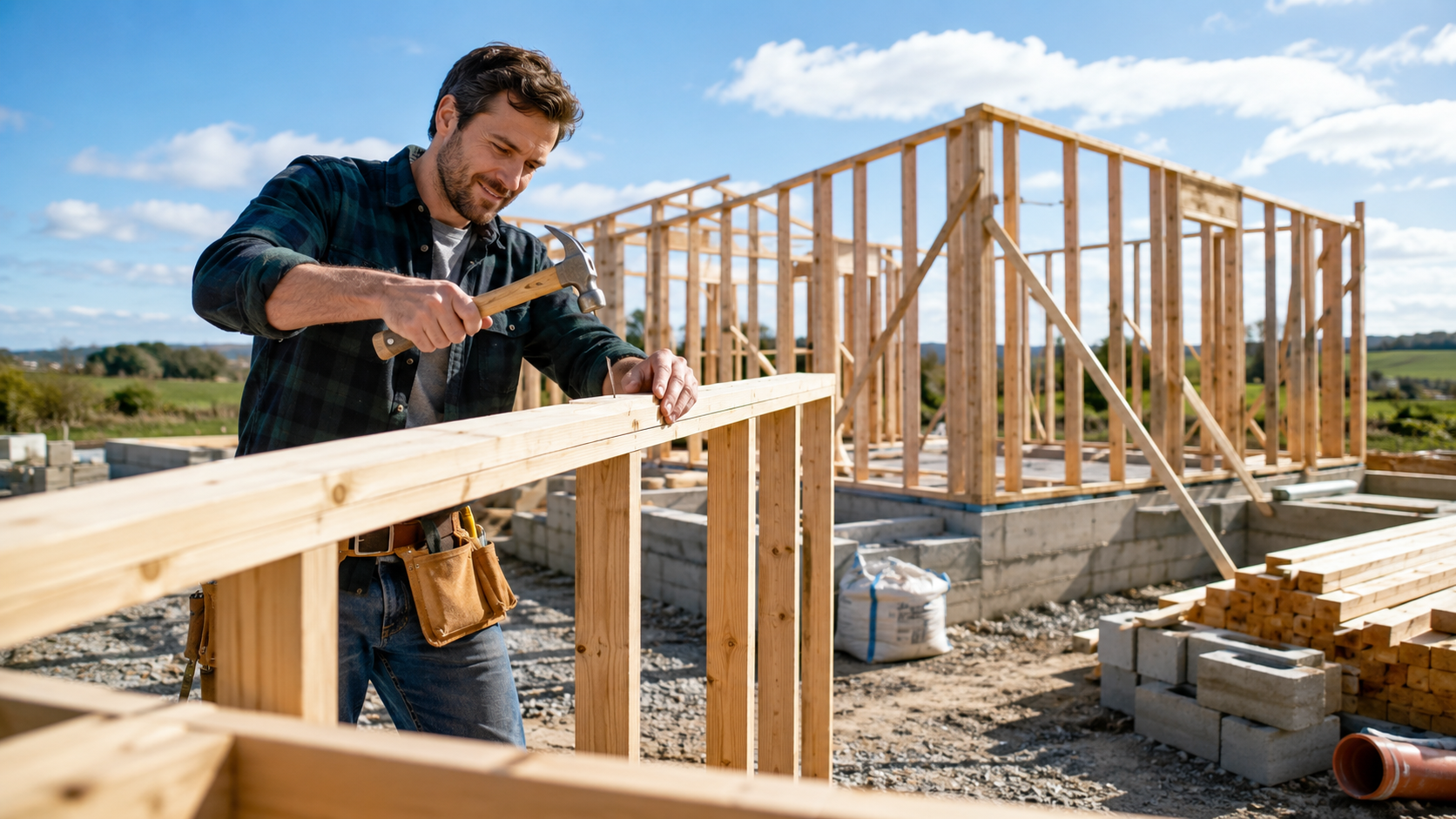
Building your own home can be exciting, but it can also feel complicated. Instead of buying a finished house, you are dealing with a site, planning permission, construction costs, builders, staged payments, and mortgage approval.
Furthermore, a self-built mortgage works differently from a normal mortgage.
With a normal mortgage, the lender usually releases the money when the property purchase is ready to complete. With a self build mortgage, the money is usually released in stages as the home is being built.
This guide explains everything you need to know about self build Ireland, including how a self build mortgage works, how much it may cost to build a house in Ireland, what documents are needed, and what steps are involved before moving in.
A self build mortgage is a mortgage used to build your own home.
Instead of buying a completed property, you are borrowing money to fund the construction of a new home on a site.
Simply put:
A self build mortgage helps pay for the cost of building a house, rather than buying one that already exists.
A self build mortgage may help cover:
However, every lender has different rules. Some lenders may allow the site to be included in the mortgage, while others may treat the site value as part of your deposit and your sole responsibility.
A self build mortgage is different because the house is not finished when the mortgage begins.
This creates more risk for the lender.
With a normal mortgage, the lender can value the finished property before releasing the money. With a self build, the lender has to consider the site, the plans, the estimated build cost, and the expected value of the home when it is complete.
Because of this, lenders usually ask for more information.
They may look for:
The lender wants to know that the project is realistic, affordable, and likely to be completed. There is far more unpredictability when building a home compared to purchasing it, so the lender wants to know as much as possible to make the process as predictable as possible. This way they can ensure the money they lend out is a worthwhile investment.
Most home buyers in Ireland need a minimum deposit of at least 10%. From there, the remaining funds are likely to be obtained via borrowing money through a mortgage.
The amount you can borrow usually depends on your income, deposit, site value, and total build cost.
Under current Central Bank mortgage rules, first-time buyers can generally borrow up to 4 times gross annual income. Second and subsequent buyers can generally borrow up to 3.5 times gross annual income.
For example:
However, this does not mean the lender will always approve the full amount. Lenders also look at spending, debts, savings, employment, and whether the mortgage repayments are affordable.
One of the most common questions people ask is: how much is it to build a house in Ireland?
The answer depends on many factors.
The price to build a house in Ireland can depend on:
There is no single price that applies to every self build.
A simple house on a straightforward site will usually be easier to budget for than a larger custom home on a difficult site.
Recent Irish cost guidance shows that standard house build costs can often fall somewhere from the low €200,000s for smaller homes to over €400,000 for larger detached homes, depending on size and location.
However, this is only a general estimate.
A one-off self build can cost more or less depending on the site, design, finishes, and professional fees.
The build cost is not the only cost involved.
When planning a self build, you may need to budget for:
It may be worthwhile to keep a contingency fund – extra money set aside in case something costs more than expected due to the many possible costs of building a new home.
For example, if your build cost is estimated at €300,000, a 10% contingency would be €30,000.
This can help protect you if materials increase in price, work is delayed, or extra site works are needed. Worst case scenario, you have extra money saved up to use on other things.
One of the biggest differences with a self build mortgage is how the money is released.
With a normal mortgage, the lender usually releases the money near the end of the purchase process.
With a self build mortgage, the funds are usually released in stages.
These are often called stage payments or stage drawdowns.
A lender may release money at stages such as:
The exact stages depend on the lender and the build.
Before each payment is released, the lender may need confirmation that the work has reached the required stage. This may come from an architect, engineer, or assigned certifier.
This helps the lender make sure the build is progressing properly.
A self-build mortgage in Ireland can be a great option for people who want to build a home that fits their needs, but it requires careful planning.
Remember:
The most important part of a self build is preparation.
If you are considering building your own home, Irish Mortgage Brokers can help you understand your mortgage options, compare lenders, and plan the finance needed to complete your self build successfully.