
Leave your details and we'll call you back
We can call you at a time that suits you.

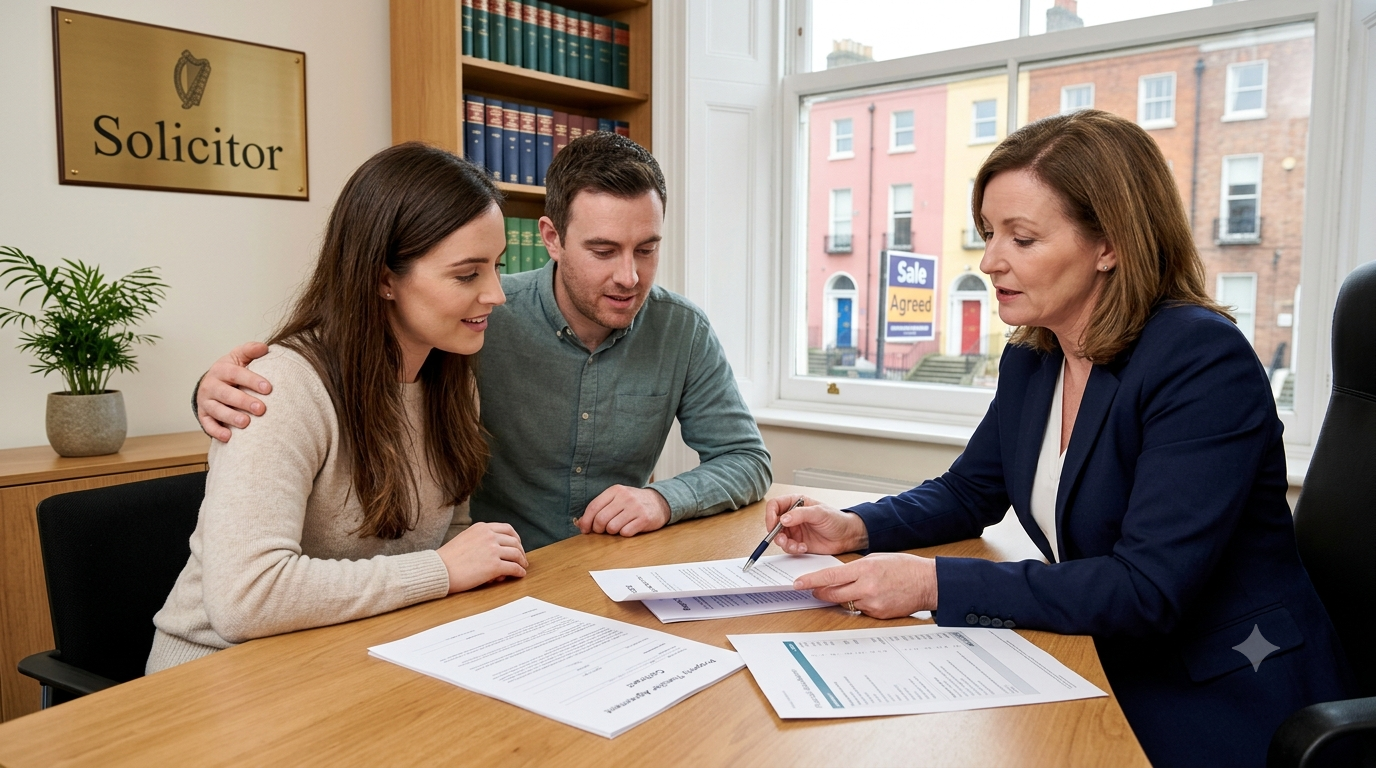
Buying a home in Ireland involves a lot of moving parts: mortgage approval, surveys, negotiations, and contracts. Somewhere in the middle of all that, you will need a solicitor. They manage the legal transfer of property from seller to buyer, and without one, the transaction simply cannot complete. What is less clear to most first-time buyers is exactly what that legal work costs and what else ends up on the final bill.
Your solicitor manages the conveyancing process: the legal side of transferring property ownership to you. That includes reviewing the contracts sent by the seller’s solicitor, conducting title searches to make sure the property is legally sound, raising queries on any issues that come up, managing the exchange of contracts, handling stamp duty filing with Revenue, and registering you as the new owner with the Property Registration Authority (PRA). It is detailed work, and getting it right matters. Title problems or planning irregularities that are not caught before closing can become expensive problems after you have the keys.
Solicitor fees in Ireland typically range from €1,200 to €3,500 or more, depending on the property value, location, and complexity of the transaction. For a standard residential purchase, most buyers can expect to pay between €1,500 and €2,500 in professional legal fees, plus VAT.
VAT on solicitor fees is currently 23%, so it is worth making sure any quote you receive is clear about whether it is inclusive or exclusive of VAT. A fee quoted as €1,500 plus VAT will cost you €1,845. Always ask.
Some solicitors charge a flat fee for conveyancing, which makes budgeting easier. Others charge a percentage of the purchase price, typically around 1%, which can add up quickly on higher-value properties. For most standard purchases, a flat-fee solicitor is likely to be better value, and many firms now advertise fixed-fee conveyancing specifically to address the lack of transparency that has frustrated buyers for years.
The average time to complete a conveyance in Ireland is around 100 days, so engaging an experienced, responsive solicitor early in the process matters; delays on the legal side can hold up a closing.
Solicitor fees are only one part of what you pay. The rest is made up of disbursements such as third-party costs your solicitor pays on your behalf and passes on to you. These are not profit for the solicitor; they are fixed costs set by government bodies and other providers.
Stamp Duty
Stamp duty on residential properties up to €1 million is charged at 1%. For properties valued between €1 million and €1.5 million, the rate is 1% on the first million and 2% on the excess. A 6% rate applies to any value above €1.5 million. For most buyers purchasing at the average Irish property price, stamp duty is one of the largest single costs. On a €400,000 home, which is €4,000. On a €600,000 home, it is €6,000. Your solicitor will collect the stamp duty and file the return with Revenue on your behalf, usually within 30 days of the deed being executed.
Land Registry Fees
Land Registry fees in Ireland are structured according to the property’s value and are payable to the Property Registration Authority. The current scale is: €400 for properties up to €50,000; €600 for properties between €50,001 and €200,000; €700 for properties between €200,001 and €400,000; and €800 for properties above €400,000. If you are buying with a mortgage, there is an additional fee to register the lender’s charge against the property.
Property Searches
Before contracts are signed, your solicitor will conduct searches to check the title and flag any issues like planning searches, judgement searches, bankruptcy searches, and company searches if relevant. These typically cost a few hundred euro in total and are an essential part of the due diligence process.
Other Outlays
Registered post, couriers, and sundry costs typically add around €150. If you are getting a mortgage, your lender will also require a separate valuation report, which usually costs between €150 and €250. This is distinct from a structural survey, which you arrange yourself and is highly recommended even though it is not legally required.
To put it into concrete terms, here is an approximate breakdown for a buyer purchasing a €400,000 second-hand home with a mortgage:
– Solicitor’s professional fee: €1,500–€2,000 plus VAT (€1,845–€2,460 inclusive)
– Stamp duty: €4,000
– Land Registry fee (transfer): €700
– Land Registry fee (mortgage registration): varies, typically €175–€400
– Searches: €200–€350
– Valuation fee (lender’s requirement): €150–€250
– Outlays (post, couriers, etc.): ~€150
Total non-solicitor costs on a €400,000 purchase come to €5,500–€6,000. Add professional fees and you are typically looking at a total legal and tax cost of €7,500–€8,500 to close on a €400,000 property.
Conveyancing is a specialist area. Not every solicitor does it, and not every firm that does it does it efficiently. When looking for a solicitor:
• Ask whether they specialise in residential conveyancing or whether it is one of many services they offer.
• Get a written quote that itemises the professional fee, VAT, and estimated disbursements separately.
• Ask how they communicate: will you have a named contact, and will updates come by email or phone?
• Ask how long they typically take from receipt of contracts to closing.
Cheapest is not always best. A slow or unresponsive solicitor can cost you more in stress and delays than the saving on fees was worth. Equally, you should not be paying premium rates for a straightforward residential purchase — fixed-fee firms have made competitive pricing more accessible.
Stamp duty on newly built homes is calculated on the purchase price minus the 13.5% VAT charged on new homes: VAT is not charged on second-hand properties, so stamp duty on those is simply calculated on the sale-agreed figure. Solicitor fees for new builds can also be slightly higher, as there is additional work involved in reviewing the builder’s contract and dealing with the management company if the property is part of a managed development.
Solicitor fees are an unavoidable cost of buying a home in Ireland, but they are not the largest one; stamp duty always is. What matters is knowing what you will be charged before you commit, having it in writing, and choosing a solicitor who will move efficiently and communicate clearly throughout the process. Budget for total legal and government costs of 2–2.5% of the purchase price, and you will not be caught short at the finish line.